How can we get students to shift from a ‘completion strategy’ to a ‘learning strategy’?

1) It’s not as easy as: explain or reflect on your process…
A student reads “explain your reasoning,” nods, and moves on. We have asked for reflection, but have we helped them learn how to do it?
Give students something concrete to reconsider: an assumption to test, evidence to compare, or a question their draft leaves unanswered. Then make time for them to act on feedback before the final grade. Reflection becomes part of improving the work.
2) Sure it’s not scalable but you can try a proof of concept.
Individual coaching takes time. Start with one assignment and one short section where reasoning matters. Test the approach before extending it across the course.
Ask for an early attempt. A paragraph or short explanation is enough. Share the criterion students should focus on
Give one question to investigate. Point to a gap in their reasoning, leaving the decision and rewriting to them.
Ask what changed. Have students explain what they reconsidered, which evidence informed the revision, and why.
Use this small trial to see where students need support and how much instructor time the process requires.
3) Or another scenario:
Imagine a student claims that a new marketing campaign caused sales to rise. You might ask:
“What else changed during that period? Use the case evidence to compare two possible explanations for the increase.”
The student has direction and still needs to weigh the evidence and defend a conclusion. That is productive struggle.
Show the class how you would work through a different example, including where you remain uncertain. Then let students apply that reasoning themselves. This brings cognitive apprenticeship into assessment: make expert thinking visible, provide coaching, and reduce support as students develop independence.
4) Now let the students apply that feedback to their submission
The next step belongs in the assignment. Ask students to revise a specific part of their submission and explain how their reasoning changed.
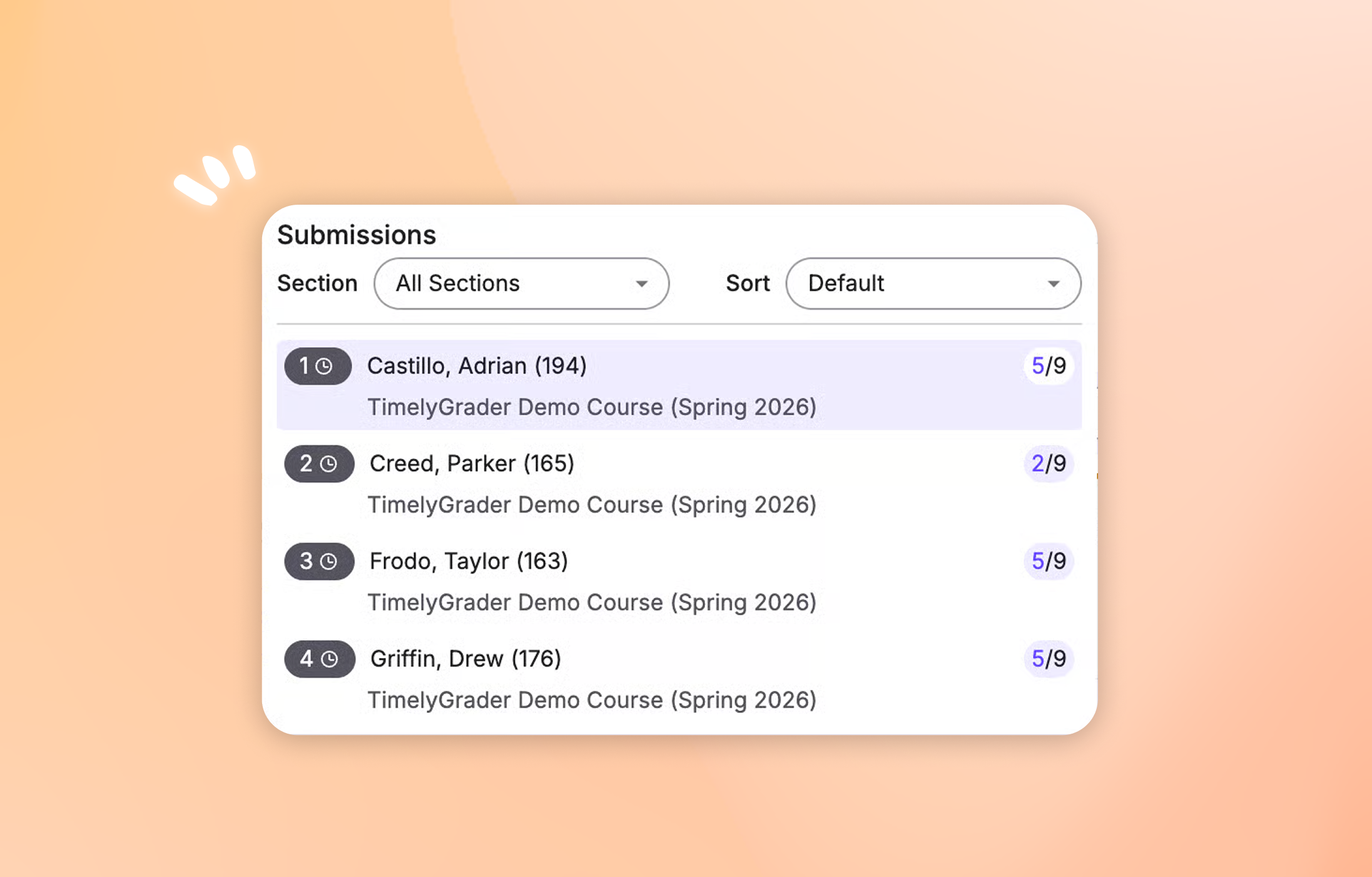
TimelyGrader’s Formative Feedback for Students lets students submit drafts for guidance tied to your rubric and instructions, without displaying scores. They can ask Hugo, TimelyGrader’s AI assistant, for clarification before revising.
You set the expectations and retain responsibility for grading. Review the quality of AI guidance and encourage students to question suggestions they cannot justify. AI-assisted grading can support this process while students remain responsible for their choices.
5) At the end, you can embed tools that provide you with insights of the process.
Look at what students do with feedback. With TimelyGrader, use the rubric feedback alongside revised submissions and students’ explanations to examine which gaps they addressed and where they still need coaching.
Tools such as Edcafe AI can add short quizzes or reading activities, with student responses and participation data helping you identify concepts to revisit.
The question to keep asking is whether students can explain and apply what they learned. Choose one assignment this week and give them a reason to rethink an answer before the final grade.