
How insights from SIT’s Teaching and Learning Academy are shaping TimelyGrader’s approach to making written assignments more resilient.
We know written assignments—as we know them—can no longer be the only indicator of student learning when students can simply use available tools to create their work.

This is a core issue many institutions and vendors are trying to address.
TimelyGrader will be introducing an oral defence feature that asks students to explain and justify the work they have submitted. Used alongside a written assignment, it gives instructors an additional way to assess students’ understanding, reasoning, and ability to apply what they have learned.
We owe a great deal to educators who generously share their experience, challenge our assumptions, and help us understand what meaningful assessment looks like in practice.
This month, we want to recognize Eric Chua and Li Siong Lim from the SIT Teaching and Learning Academy (STLA) at the Singapore Institute of Technology (SIT), whose feedback has been instrumental in shaping our approach. They shared assessment examples that bring together written assignments, oral responses, and viva conversations to give instructors a fuller picture of student learning.
In particular, they have helped us clarify two areas:
1) Should written assignments and oral defence be graded together or separately?
Given the complexity of their student submissions and grade passback in D2L, there are merits to both. The choice depends on what the instructor wants to assess and how the assessment is structured.
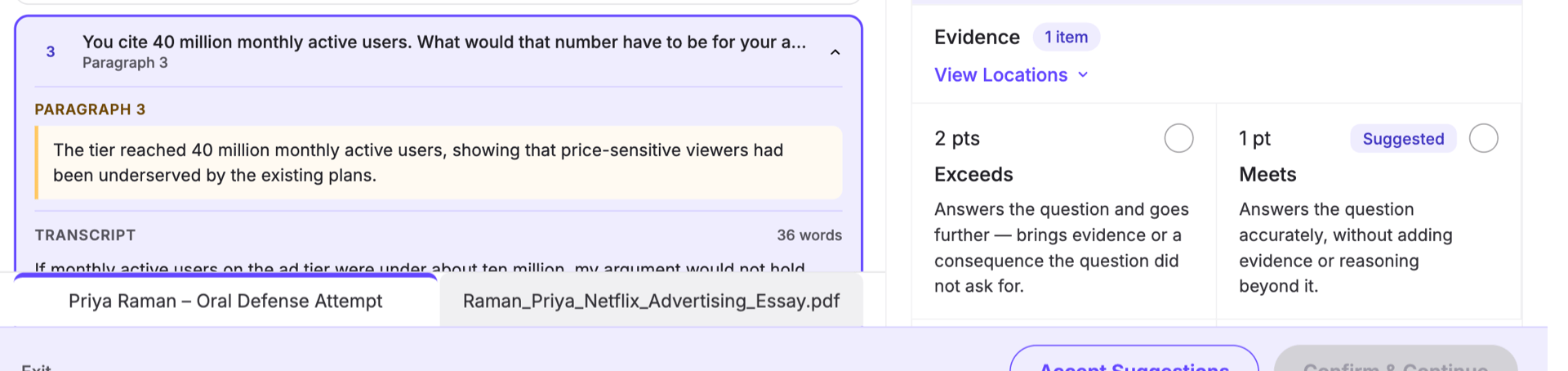
When assessed together, the written submission and oral defence give the instructor complementary evidence to consider when making a grading decision. Students can explain their choices, clarify their reasoning, and respond to questions about their work.
When assessed separately, the written assignment receives its own evaluation and grade, while the oral defence provides an opportunity to assess the originality of a student’s work.
Eric and Li Siong shared examples that helped us recognize the importance of accommodating both approaches while ensuring a smooth transition between TimelyGrader and D2L. This resulted in the following design decisions:
Allowing you to grade them separately or together.
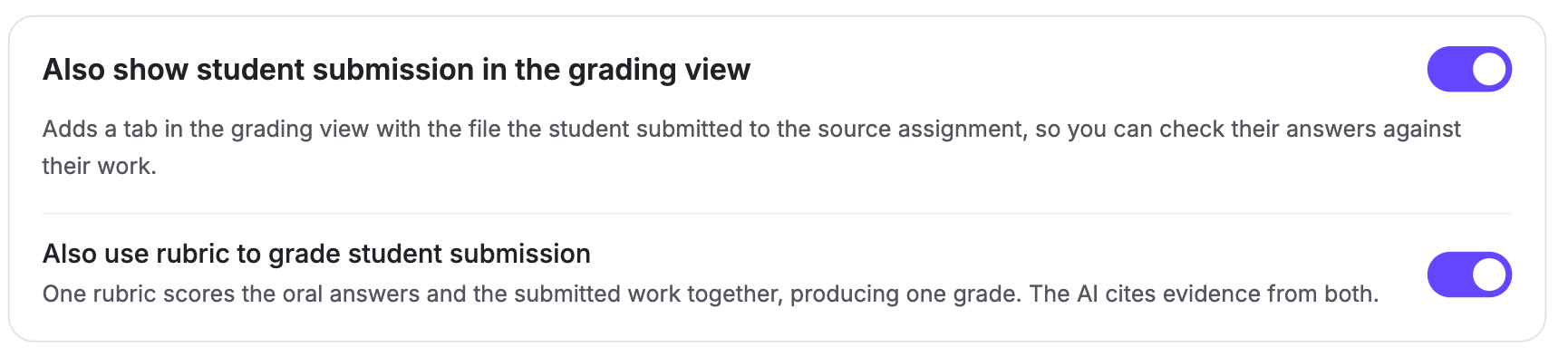
If you decide to grade them together, we can support that too. TimelyGrader already supports multi-file and multimedia submissions.
2) Which student submission should an oral defence be based on?
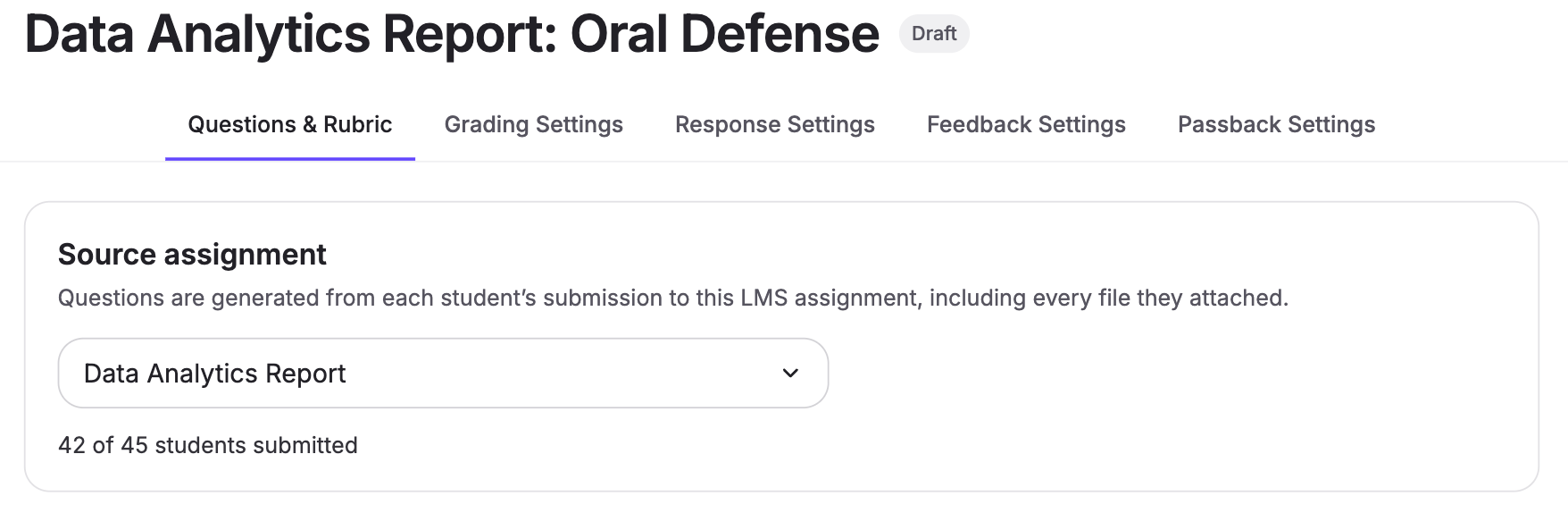
An oral defence connected to a written assignment should use the assignment files already submitted for assessment. This keeps the questions tied to the same work the instructor is reviewing.
Early in our design process, we considered allowing students to upload a file when starting their oral defence. Our friends at SIT quickly highlighted a potential weakness: students could upload a different or simplified version, changing the material used to generate their questions.
That observation helped establish a core design principle for TimelyGrader: use the original assignment files submitted through D2L as the source for the oral defence.
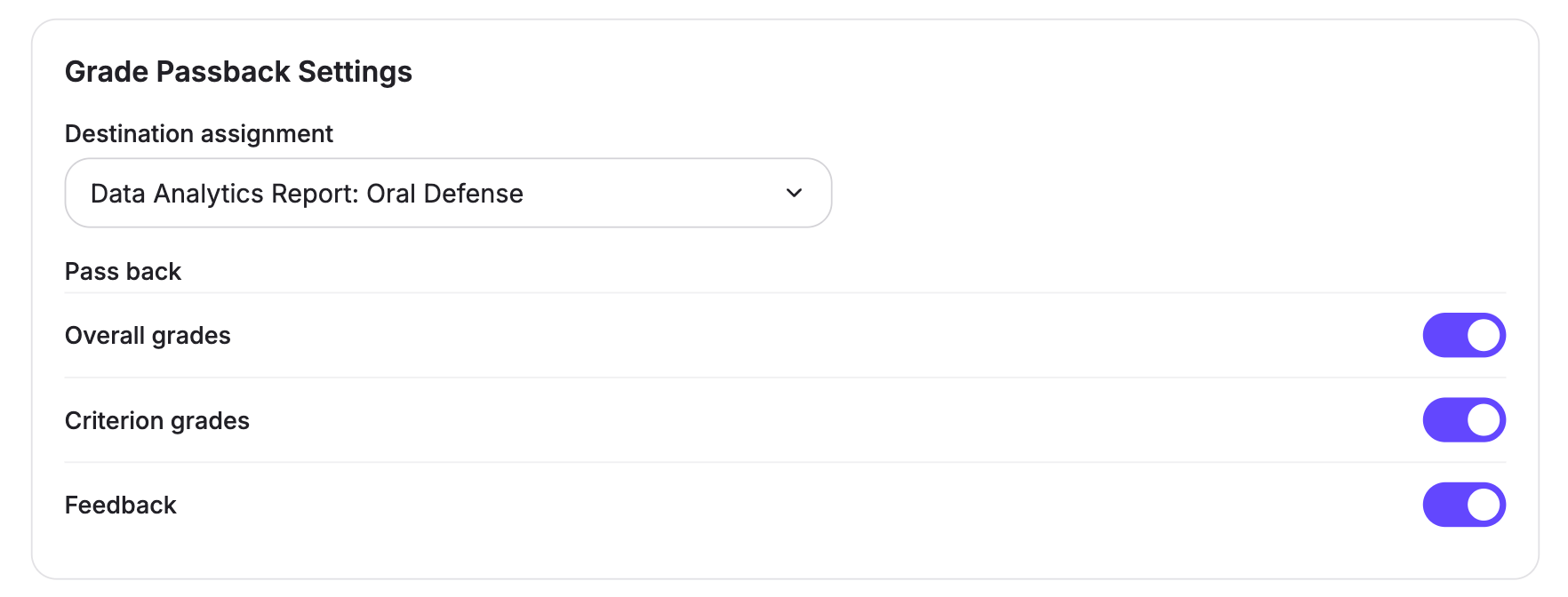
This also means that we needed to decouple the grade passback destination from the source assignment in D2L. What if SIT instructors want to use a separate assignment dropbox to receive oral assessment grades? That will be included in our Oral Assessment release.
What does this mean for TimelyGrader’s design?
These discussions are helping us develop AI-assisted oral defence around practical assessment needs: flexibility in how instructors evaluate written and oral work, a consistent source submission, and instructor control over assessment decisions.
We are grateful to Li Siong and Eric for the time, examples, and thoughtful feedback they have contributed throughout our design process. Their input has directly influenced how we approach oral defence and reinforced the value of involving educators early in product development.
If you are exploring oral defence in your courses, we would welcome a conversation about your assessment approach and the workflows you need.
Chris & the TimelyGrader team