A diferencia de los evaluadores con IA tradicionales, que solo analizan texto o se enfocan en ensayos, TimelyGrader también puede evaluar elementos visuales dentro de las actividades. Esto le permite adaptarse a una mayor variedad de formatos, como presentaciones, videos y hojas de cálculo. Entendemos todo el proceso de evaluación.

Hugo offers AI support with instructor control
Hugo can help you build rubrics, clarify suggested scores, and improve feedback. He does not independently issue final grades or replace instructor judgment.
In conversations with early institutional partners, faculty and administrators consistently asked for AI that supports their decisions rather than making them for them.
TimelyGrader evalúa más que solo el texto de una diapositiva. Nuestras herramientas de calificación y retroalimentación con IA pueden analizar tanto el contenido visual como el escrito en las diapositivas de una presentación al generar sugerencias de evaluación y comentarios.

Si usas herramientas de evaluación con IA para trabajos, es muy probable que las entregas de los estudiantes también incluyan elementos visuales. TimelyGrader puede procesar actividades con recursos como gráficas, diagramas e infografías.

TimelyGrader puede analizar archivos .XLSX y .CSV. Ya sea un análisis estadístico o un registro del crecimiento de plantas, nuestra herramienta de evaluación con IA ofrece retroalimentación y sugerencias de calificación personalizadas a partir de una revisión integral de los datos presentados.

Próximamente...
Estamos incorporando más flexibilidad en los tipos de actividades que TimelyGrader puede manejar. Las evaluaciones modulares te permitirán combinar distintos tipos de preguntas para crear una estructura de actividad personalizada, con IA integrada en todo el proceso para apoyar la evaluación.

Your students' work is not used to train Hugo
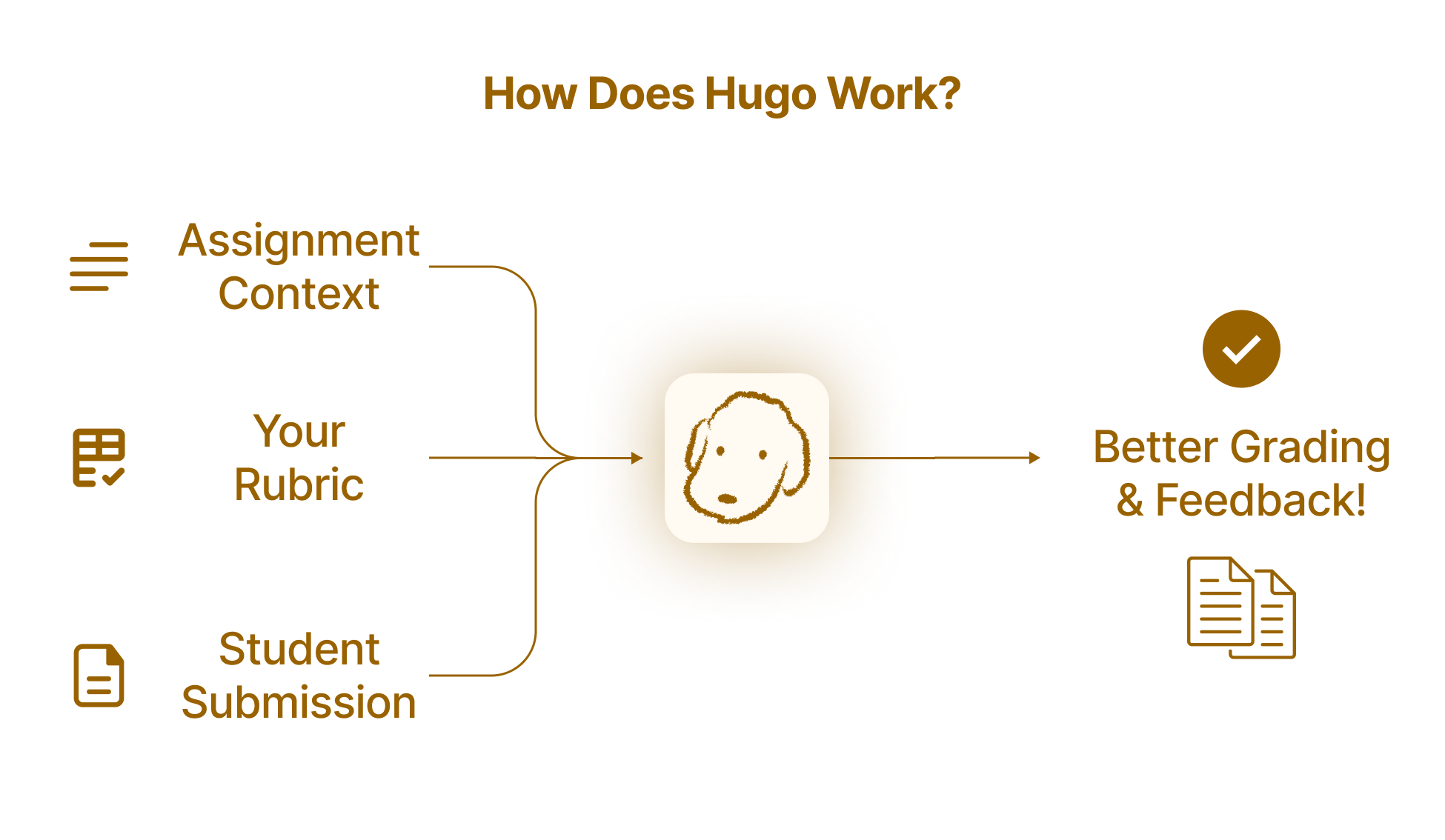
When your department chair or IT asks "does this tool learn from our students' work?", the answer is no.
Most AI tools learn from how you use them. Hugo does not work that way.
Hugo uses assignment context, your rubric, the student submission, to help you grade better and provide better feedback in the moment. That context is not used to train any model. Your institution's grading data stays on your dedicated TimelyGrader instance and does not feed back into Hugo's underlying intelligence.
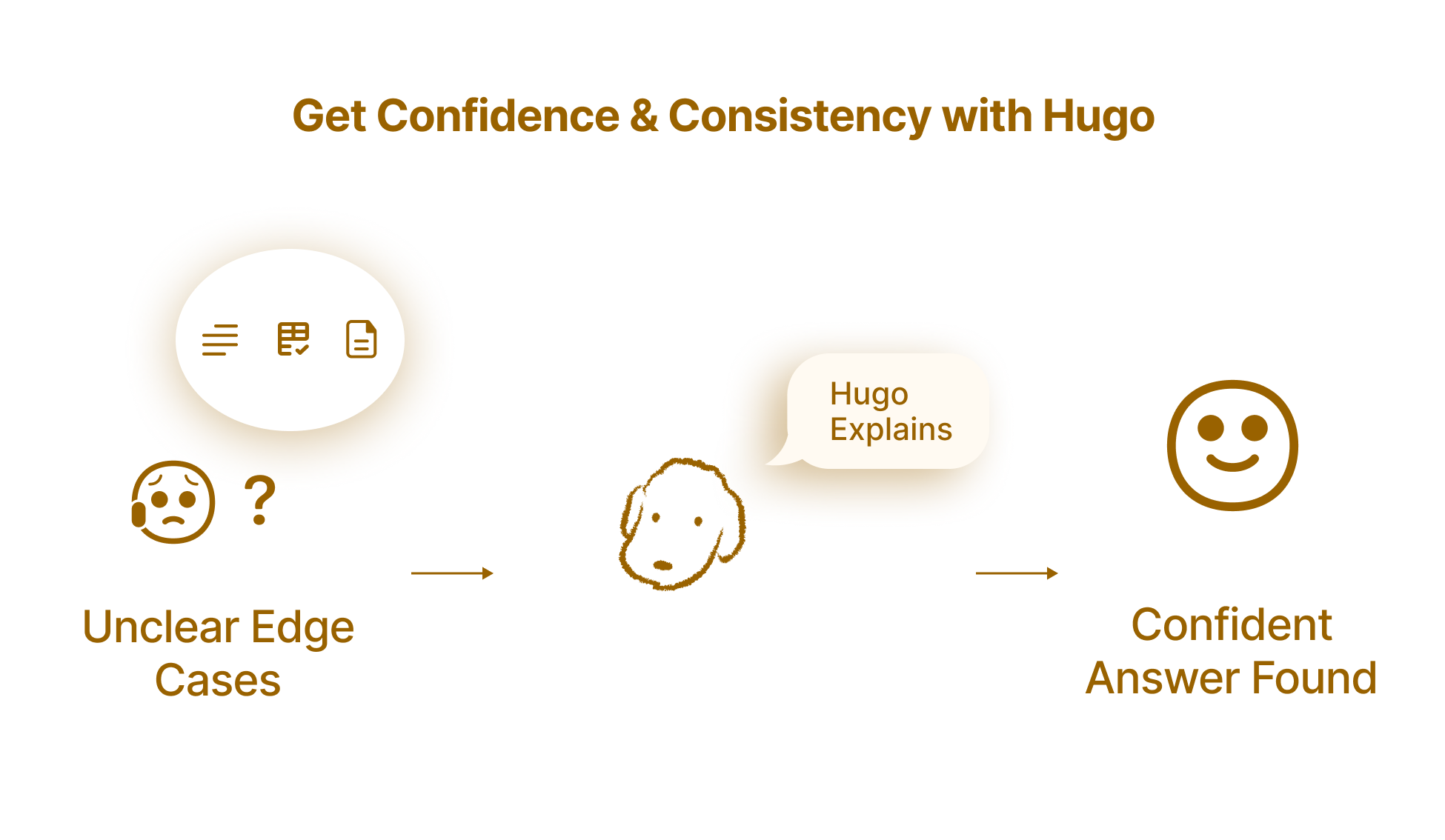
Training the handler, not the AI
What Hugo does instead is try to make you better at using the platform. If you are unsure how a criterion applies to an edge case, Hugo explains the reasoning. If your rubric is producing inconsistent results, Hugo helps you diagnose why. The goal is a more confident, more consistent instructor and instruction going to the AI, not a smarter AI.
See Hugo In ActionBook a demo and we will tailor the session to your institution's use case, whether that is large lecture courses, writing-intensive seminars, or STEM assessment.